A key concept in the Pathways and Paws(es) design is reaching into the experience of the walk as a co-performing partnership between person and companion animal.
We are particularly engaged with the potential for physical place-based designs where the central design metaphor is daily life and emergent place-based community connectivity. If we are truly going to design for slowing down then considering physical place as a collaborative partner in the designing is essential. We are also enticed by the potential of the re-focus on the pauses (places) of the typical GPS tracking app. If we include the pauses that our dogs make during the walk then we are setting ourselves up for the next phase of the project which might look at constructing place-based tracking from the companion animal’s perspective.
from Pathways & Paws(es) 2018
We started listing the kinds of experiences that both the walker and the companion animal might have in order to get a list of quick codes that we could use to annotate waypoints in dogwalk.
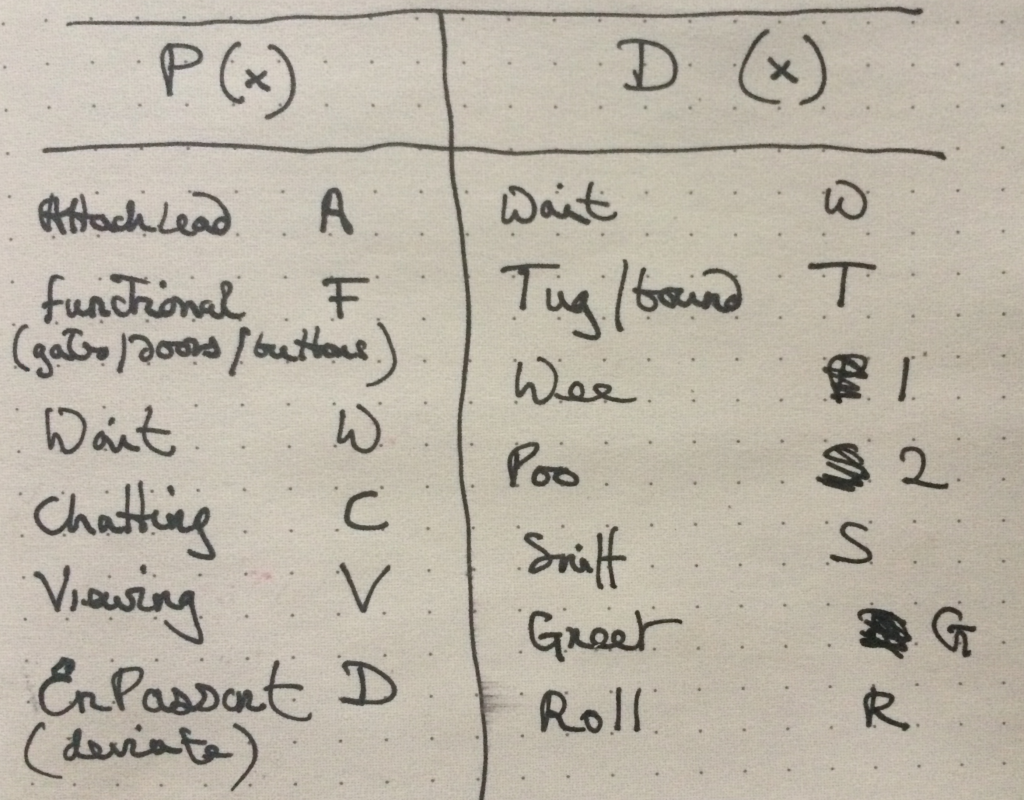
Some of these tags reflect very early design ideas. Attach lead (A) was intended to be an important tag because the notion was that this could later become a simple way of activating the GPS tracking and providing a start point for a geofence (e.g. tracking would actually start 50 metres after attaching the lead in order to avoid giving away personal information and a home address). Functional (F) seemed useful because it might encompass hurdles and barriers such as gates or crossing. Wait (W) was in a similar vein but purposed to the concept of using the app to reveal ‘broken’ pathways. For example a 10 minute wait to get across a busy road. The Viewing (V) tag was a kind of corollary to waiting, so stopping to admire or enjoy something during the walk. Chatting (C) refers to an actual exchange between the walker and other people and En Passant or Deviate (D) is an attempt to capture the we often walk passed others and acknowledge their presence by avoiding them or containing the dog. For example passing someone with a stroller who needs the space or passing someone who doesn’t wish the dogs to meet.
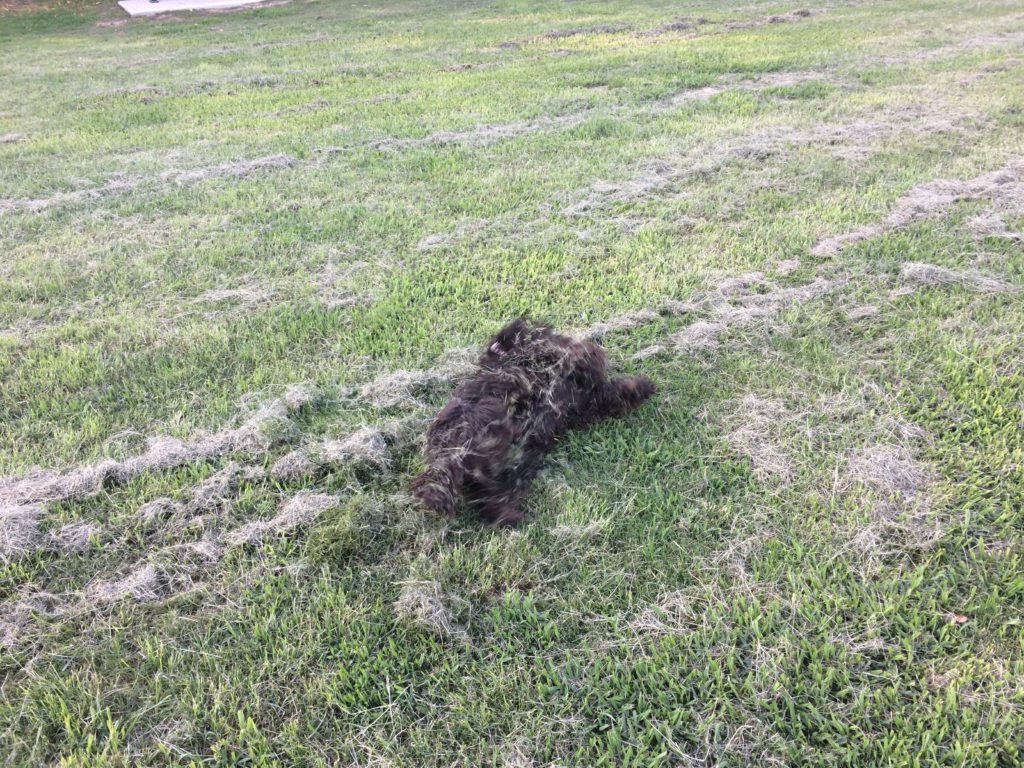
The waypoint tags for the dog in this list are again somewhat off the cuff. Wait (DW) was an idea that the dog might stop for its own reasons (perhaps durning an En Passant). Tug (T) encapsulated a need on the part of the dog to investigate something, that sudden veering towards a particularly interesting smell. Sniff (S) was intended to actually capture the dog’s smelling activity, Roll (R) is an extension of this as most of the exuberant dog rolling takes place on the more interesting smells. Greet (G) refers to the friendly dog to dog exchanges.
Wee (1) and Poo (2) are obvious animal business but also from the dog’s perspective often important recognition of other dogs passing in the same place. Scent marking is an instinctual behavior in which a dog deposits their own odor — in the form of urine or feces — onto the environment to mark territory or make a statement. Other dogs who come upon the scent can discern a lot about fellow canines in the neighborhood. Apparently they also orient themselves against the earth’s magnetic field.
Next: Evolving the waypoint tags